Vorsichtsmaßnahmen für die Verwendung der Dosierpumpe:
1. Die meisten quantitativen Pumpen verwenden offene Kreisläufe.
2. Die Durchflussgeschwindigkeit des Pumpeneinlassrohrs liegt vorzugsweise zwischen 0,6 und 1,5 Metern pro Sekunde.
3. Die Durchflussrate des Ölauslassrohrs wird vorzugsweise auf 2,3 bis 4,75 Meter pro Sekunde geregelt.
4. Der Druck am Einlass und Auslass wird auf -150 mmHg ~ +0,5 kgf/cm2 geregelt.
5. Die Länge der Öleinlassleitung sollte innerhalb von 1 Meter liegen.
6. Die Exzentrizität zwischen der installierten Pumpe und der Antriebswelle beträgt 0,05 mm ±10.
7. Bevor Sie die Pumpe starten, prüfen Sie zunächst, ob die Lenkrichtung und der Antrieb der Pumpe übereinstimmen.
8. Wenn Sie die Pumpe zum ersten Mal starten, muss sie unter der Bedingung erfolgen, dass am Ölauslassende keine Druckbelastung vorliegt, und es ist
am besten, sie zunächst mehrmals zu bewegen.
9. Die Viskosität beim Starten der Pumpe darf nicht größer als 200 mm2/s sein, insbesondere beim Starten mit niedriger Drehzahl.
10. Die Temperatur des Kraftstofftanks sollte vorzugsweise mehr als 8 °C betragen.
11. Wenn die Pumpe zum ersten Mal gestartet wird und der Ölauslass das Öl nicht reibungslos ablassen kann, muss zuerst die Luft abgelassen werden.
12. Obwohl die Wasser-in-Öl-Emulsion weich ist und verwendet werden kann, müssen der Betriebsdruck und die Geschwindigkeit um 30 % reduziert werden.
13. Wenn Sie nicht brennbares Hydrauliköl verwenden, müssen Sie dies zunächst dem Werk mitteilen, da die Materialien der Dichtungen unterschiedlich sind.
14. Das Betriebsöl muss gut gefiltert sein und die Qualität des Öls muss ISO 18/15 oder besser entsprechen.
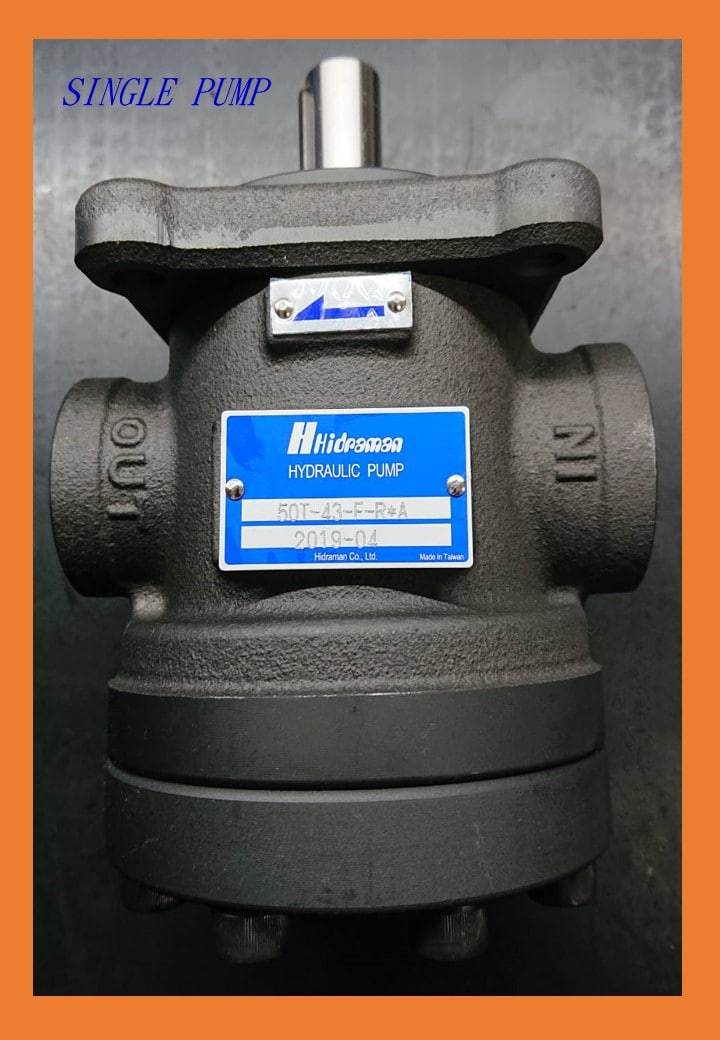
Car in application(Fixed displacement single pump):
1.In fixd displacement vane pump system , the open circuit is recommended.
2.Set Suction Port , the fluid transmission speed at the pump: must be between 0.6M/sec ~ 1.5M/sec.
3.Set Discharge Port ,the fluid transmission speed : must be between 2.3M/sec ~ 4.75M/sec.
4.Set Suction , at the pump Suction Port must be between -150mmHg ~ +0.5Kgf/cm2.
5.Lay the suction piping the fluid level at least 1M.
6.When connecting the pump to an electric motor,limit the tolerance of alignment between the two shaft
centers to 0.05m/m TIR or angle ± 1 degree.
7.Before starting,make sure that direction of the electric motor shaft rotates the same direction
with the pump shaft as indicated with an the nameplate or on the housing the pump.
8.When the pump is be operated for the first time,place the pump delivery side in No-Load condition and
repeat starting and stopping of the motor for several times,to eject air form inside of the pump and
piping,if keep on 10 minutes operation will be much better.
9.Viscosity range for a fixed displacement vane pump.
800 mm2/sec maximum for starting with delivery.
200 mm2/sec maximum for starting at zero stroke.
16 mm2/sec minimum at maximum operating temperature.
10.In selecting a hydraulic fluid,remember that the minimum permitted temperature in the hydraulic
system must be at least 8O C above the pour point.
11.Air Bleed:
All the time of first-starting,if the pump does immediately prime, air should be bled the pump delivery line.
This may be accomplished by loosening connection in the delivery line close to the pump until oil flows-indicating the pump has primed.
An air bleed valve is available for this purpose.
12.Water-in-Oil Emulsions
Water-in-oil emulsions may used.However , they require caarful selection ang monitoring of the fluid.
13.Synthetic Fire Resistant Fluids
Phosphate esters and their blends with operating viscosity of the petroleum oil described above may beused.
These fluids are generally comatible with fluorocarbon and silicone elastomers.
14.Filtration Requirements
For satisfactory service life of components,use full flow filtration to provide fluid cleanliness
conforming to ISO code 18 / 15 or better.
E-MAIL: sales@hidraman.com.tw
Taiwantrade.com and iDealEZ.com uses analytical cookies and other tracking technologies to offer you the best possible user experience. By using our website, you acknowledge and agree to our cookie policy.
For more information on cookies or changing your cookies settings, read Taiwantrade & iDealEZ’s Privacy Policy.
